
Since I began creating content for social media in 2014, my main camera has always been a smartphone, as I never had the privilege of owning a personal camera. My journey started with a borrowed Huawei phone, then a Vivo, and later, the office’s first-generation iPhone SE. I captured content for various events, including the launch of Pizza Hut in Uganda, the Samsung S7 Edge release, and other events for my employer, Capital FM Uganda Limited, all the way to the Uganda Solidarity Summit in 2017. This continued until 2022 when my current employer, UNHCR Uganda, provided me with professional equipment like a Sony A7 III. During this time, I produced all content for UNHCR Uganda from 2017 to 2022. Notably, I created the best-performing global organic video shot on an iPhone 7 Plus, along with many other successful pieces using just a smartphone.
In 2017, I met Dr. Muhumuza Joseph, our gynecologist, during my wife’s pregnancy. We became friends through our regular antenatal visits, with the exception of two occasions when he was unavailable due to assisting other mothers in delivery. When my wife’s water broke, I joined Dr. Joseph in the operating theater, and after a long night, our son, Awesome, was born. Dr. Joseph continued to check on us until our discharge. Since then, I referred many friends to him because of his unmatched professionalism.
Fast forward to 2021, Dr. Joseph and I started discussing the importance of building an active social media presence. True to his professional nature, he took the time to master the basics of TikTok before posting videos. Within a month, his account surpassed 10,000 followers due to the valuable content he shared. His videos provide a clear and accessible explanation of complex medical procedures, including fertility treatments, while offering free medical information. However, he always advises patients to book appointments for personalized consultations and accurate diagnoses. Dr. Joseph stays in touch with his patients, following up until they’re well.
As we transitioned from medical to cinematic terms, I relied on the same creativity and problem-solving I had developed through shooting with smartphones. With the acquisition of more professional equipment, Dr. Joseph began recording interviews with other doctors. Initially, we experimented with TikTok livestreams, aiming for two-way audio communication with viewers. After a few trials, we were ready to shoot our first two-person interview.
Despite only having iPhones to shoot the videos (except for one experiment with DJI cameras), we were able to produce high-quality content. Here are some episodes we’ve made:
- IVF Explained: YouTube(https://youtu.be/XB9ZZXwOivQ?si=nBT1V2IEggnepRg4), TikTok(https://vm.tiktok.com/ZMkkRuCbx/)
- Endometriosis and Infertility: YouTube(https://youtu.be/hIFEeYyBbJY?si=8UPazOeRjwKiBGrt), TikTok(https://vm.tiktok.com/ZMkkRVDyu/)
- Polycystic Ovarian Syndrome: YouTube(https://youtu.be/Za9k7hYJQkk?si=oqUKJO5SwTpFWbLn), TikTok(https://vm.tiktok.com/ZMkkRbQKn/)
- Recurrent Pregnancy Losses: YouTube(https://youtu.be/sCS0-VJfJ2c?si=qWLs_CloT9HjJEI), TikTok(https://vm.tiktok.com/ZMkkR4EqH/)
- Assisted Reproductive Technologies: TikTok(https://vm.tiktok.com/ZMkkRqUbm/)
If I were to share how I produced each episode, I could easily write a book detailing my creative process. From planning the shoot to publishing the final video, I would cover everything: setting up the scene, experimenting with camera angles, overcoming the challenges of shooting on iPhones, and the creative discoveries along the way. I’d also discuss the failures we encountered, the creative flow we developed, and the frustration of transferring large files from iPhones to external storage. The editing phase was a challenge too. Since I didn’t have my own computer at the time, I borrowed a friend’s MacBook and later used my iPad to edit the footage. Finally, I’d discuss exporting and publishing the video. This entire process has been a valuable learning experience, improving my workflow and helping me become a better director of photography, director, video editor, and storyteller. I’ve mastered shooting with iPhones and editing on the iPad using apps like Lumafusion and DaVinci Resolve.
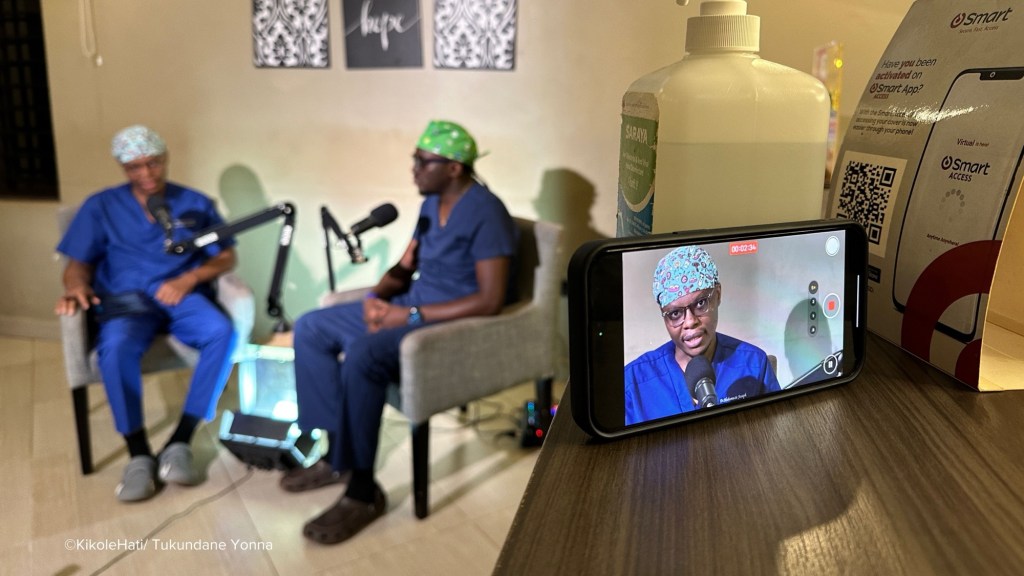
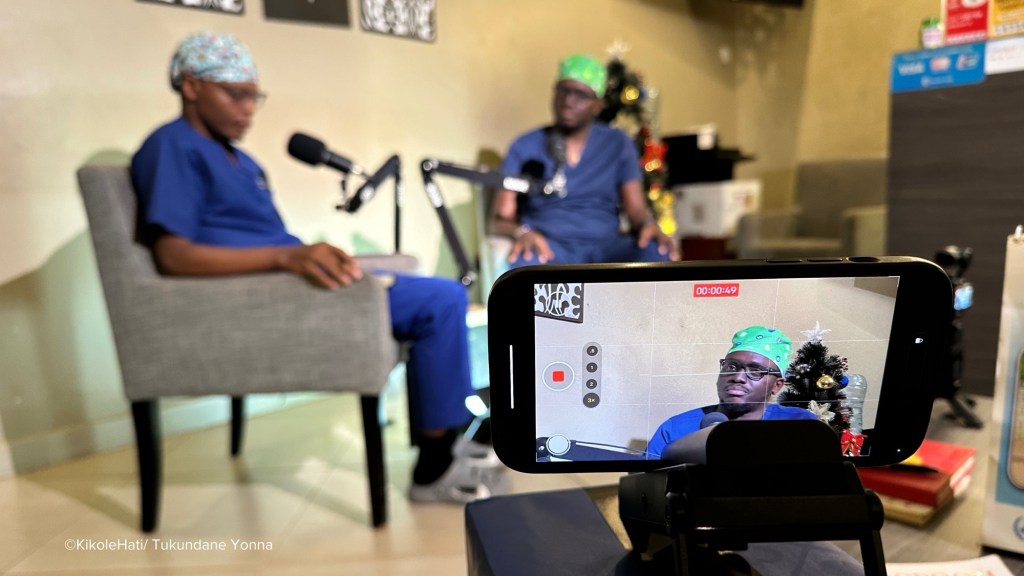
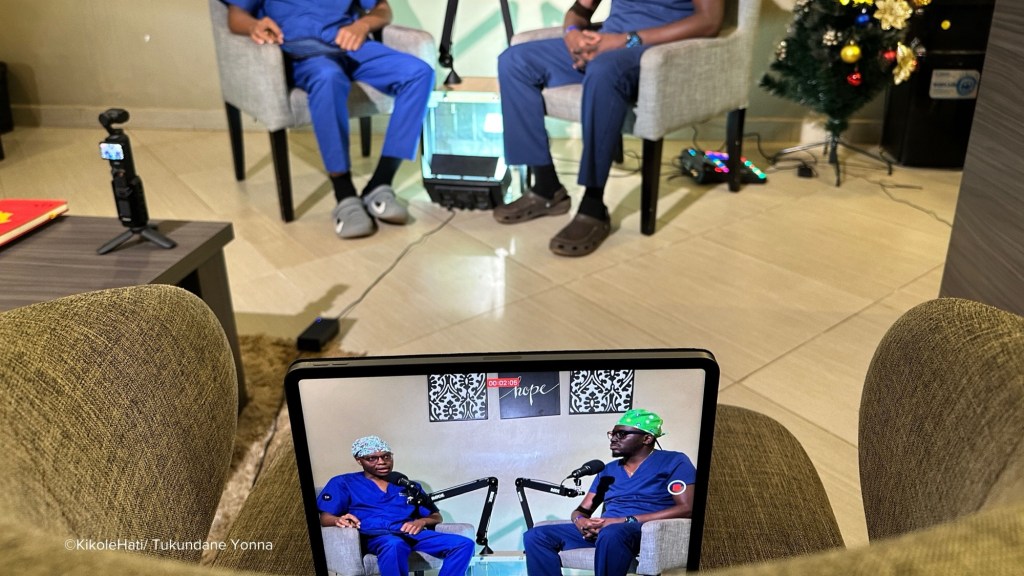
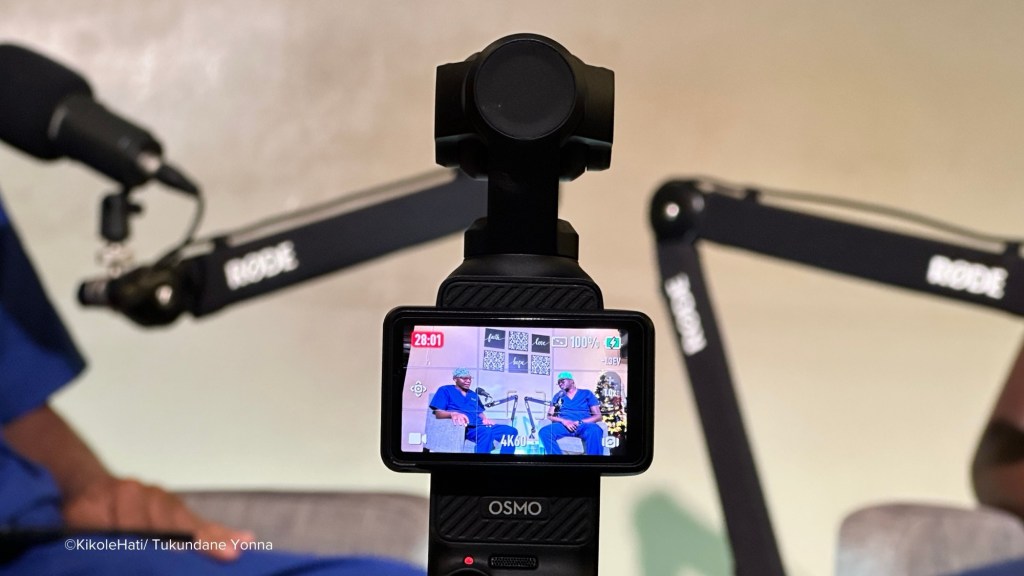
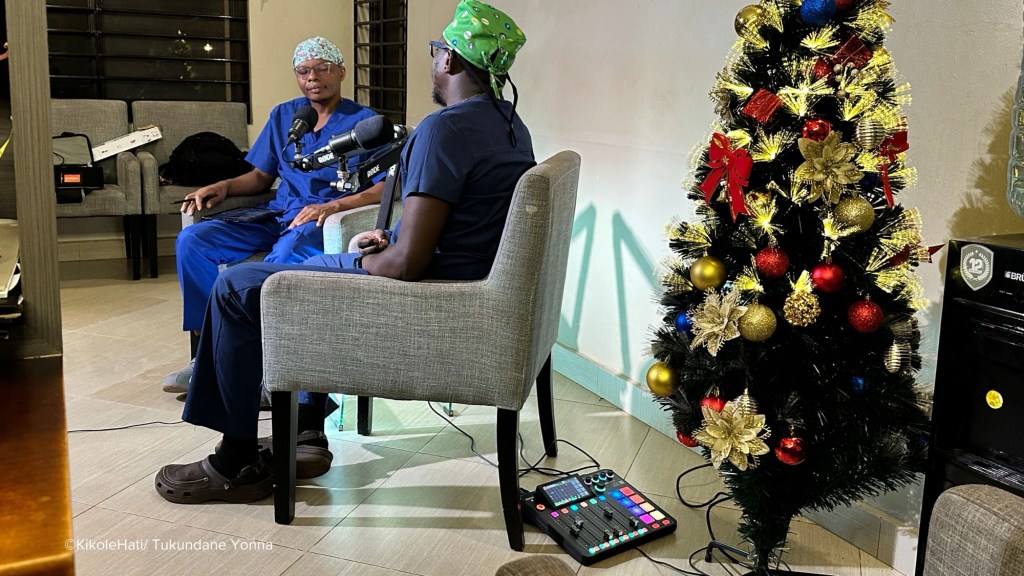

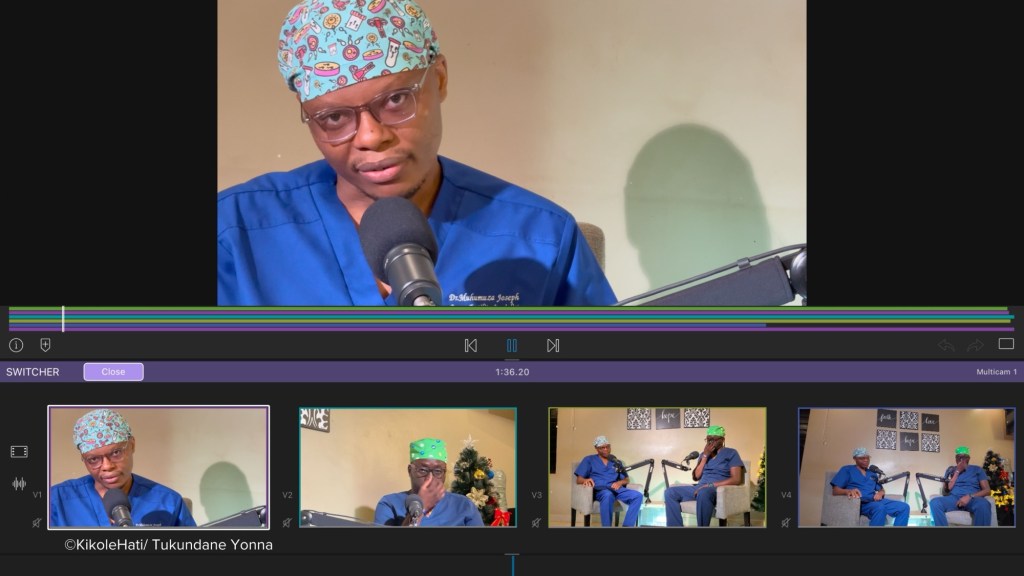

For this article, I will focus on the last video we produced, titled Assisted Reproductive Technologies. The day of shooting was filled with drama and uncertainty. Earlier that day, I had lost important documents I was processing, and my energy was low. To make matters worse, I forgot some of my essential gear, like tripods and card readers, and the traffic was terrible due to Christmas shopping. By the time I arrived at the shooting location, we were an hour late. Half an hour later, the setup was complete, and we were recording with four cameras: an iPhone 15 Pro Max, iPhone 14 Pro Max, iPad Pro 12-inch, and a DJI Pocket 3. The audio was recorded using a Rodecaster Pro.
The primary camera, an iPhone 15 Pro Max, was focused on Dr. Joseph. Since I didn’t have a tripod, I improvised by using a sanitizer bottle to support the phone and keep it steady. I used the telephoto lens at 5x zoom for a close-up shot of Dr. Joseph. The second camera, an iPhone 14 Pro Max, was used for Dr. Anthony’s shot. Again, I improvised using books and plastic on the table, and I used the telephoto lens at 3x for a composed shot. The third camera was the iPad, which captured the scene at a normal focal length, and the fourth camera was the DJI Pocket 3, providing a wide-angle shot. Audio was captured via the Rodecaster Pro.
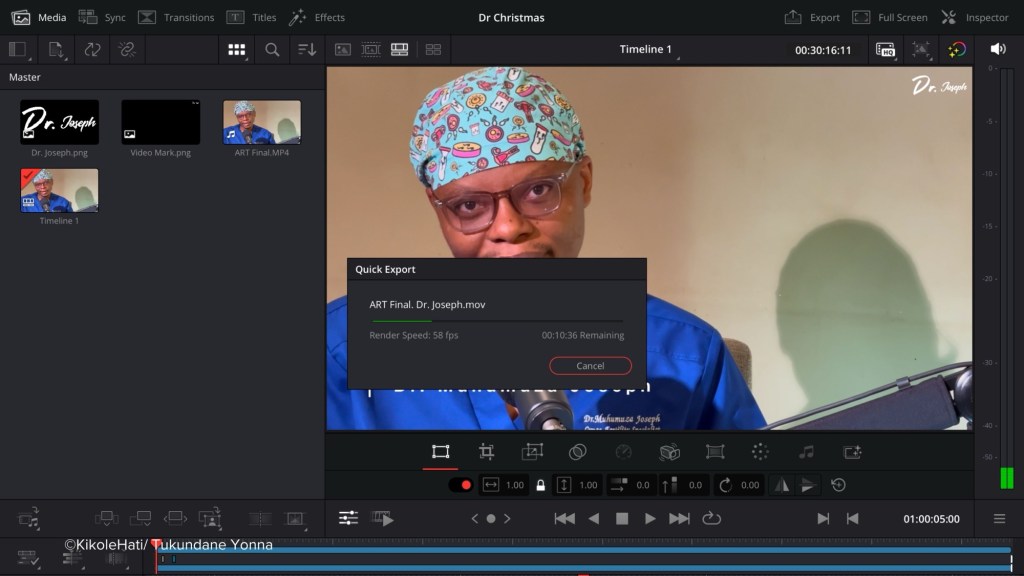
After shooting, the editing process was full of unexpected challenges. I often edited just before bed or early in the morning, and I couldn’t stop laughing while editing the footage because both doctors were trying to hold back laughter during the shoot. The editing was delayed as I found myself laughing along with them. However, the real frustration came when DaVinci Resolve for iPad kept crashing. After several failed attempts, I switched to Lumafusion, which made synchronizing multi-cam footage much easier. Once the footage was ready, I transferred it back to DaVinci Resolve for iPad to add text and graphics. I also prefer exporting from DaVinci Resolve, as the file sizes are smaller. Finally, I sent the finished video to Dr. Joseph, who published it.
In retrospect, this project was a massive learning curve that refined my skills in production, problem-solving, and adaptability. I now have a deeper understanding of how to approach content creation, especially when faced with unexpected challenges. The knowledge and techniques I gained have become an integral part of my workflow, both in my work at UNHCR and in planning new projects. Although putting together this particular video was no easy feat, it provides an excellent opportunity for viewers to learn about Assisted Reproductive Technologies and how to book a consultation with Dr. Joseph. The journey may have been difficult, but it was a reminder that even the most challenging moments can lead to meaningful outcomes.
The End.
#KikoleHati #TukundaneYonna #YesuNamara #2564wd
 Tukundane Yonna
Leave a comment